THE PARTNERSHIP

Two strengths, one operation.
EFC and its logistics partner Warelog run as one European operation for non-EU brands. The warehouses, the freight network, and the 21 years of logistics discipline behind them are Warelog's. The bonded capability is Warelog's licensed service, delivered through the partnership. EFC brings the market access and the integration layer, and runs the account. One body to the brand: one base, one account, one point of contact.
EFC is a European operating base for non-EU brands. It is not a distributor: you keep the customer and the margin. It is not a classic third-party logistics vendor: customs clearance, import handling, and the bonded warehouse run inside the same operation.
Warelog is a Portuguese customs and logistics operator running since 2005. Visit warelog.com.pt

THE FRAME
A market-access operator, joined to a logistics backbone.
Building a European presence from outside usually means assembling vendors. That means a warehouse here, a customs broker there, a tax agent somewhere else, and a developer to wire it together. EFC removes the assembly. The physical backbone is Warelog's, built since 2005: the warehouse space, the bonded and customs capability as their licensed service, and the freight network. EFC brings the market access, the integration layer, and runs the account. One operation to the brand, honest about whose strength is whose.
WHAT THE OPERATION COVERS
One seam. The brand only ever deals with one operation.
One operation covers it end to end. The physical and customs side runs on Warelog’s licensed backbone, and the market access, the integration, and the account are EFC’s. Nothing sits on the brand’s desk to hand over.
See what the operation covers, in full
- Market access
- EFC's own layer: Importer of Record, fiscal representation for non-resident businesses, authorised consignee coordination, and OSS VAT across the 27 member states.
- Fulfilment execution
- Pick, pack, dispatch, returns, and the day-to-day running of the brand's orders across B2B, D2C, and marketplace: EFC's fulfilment layer, running inside Warelog's warehouses.
- Bonded customs
- Warelog's licensed service, delivered through the partnership: customs warehouse, fiscal and excise warehouse, temporary deposit, and authorised consignee status across Portuguese sites. Customs clearance and import handling run as a node in major freight chains.
- Freight and dangerous goods
- Warelog's network: pallet, shelf, and bulk storage, controlled-condition handling where a product requires it, named European freight lines, and ANPC-licensed ADR and IMO dangerous-goods handling.
- The GPSR Responsible Person credential
- Held by EFC for in-scope consumer products as a separate, consumer-products-only role.
- The API and integration layer
- EFC's build: the brand's store, marketplace, and ERP connect to the operation, alongside Warelog's warehouse-management system for stock and movements. The brand runs the operation remotely from its own systems.
THE BACKBONE
One backbone, run together, on the name Warelog has built since 2005.
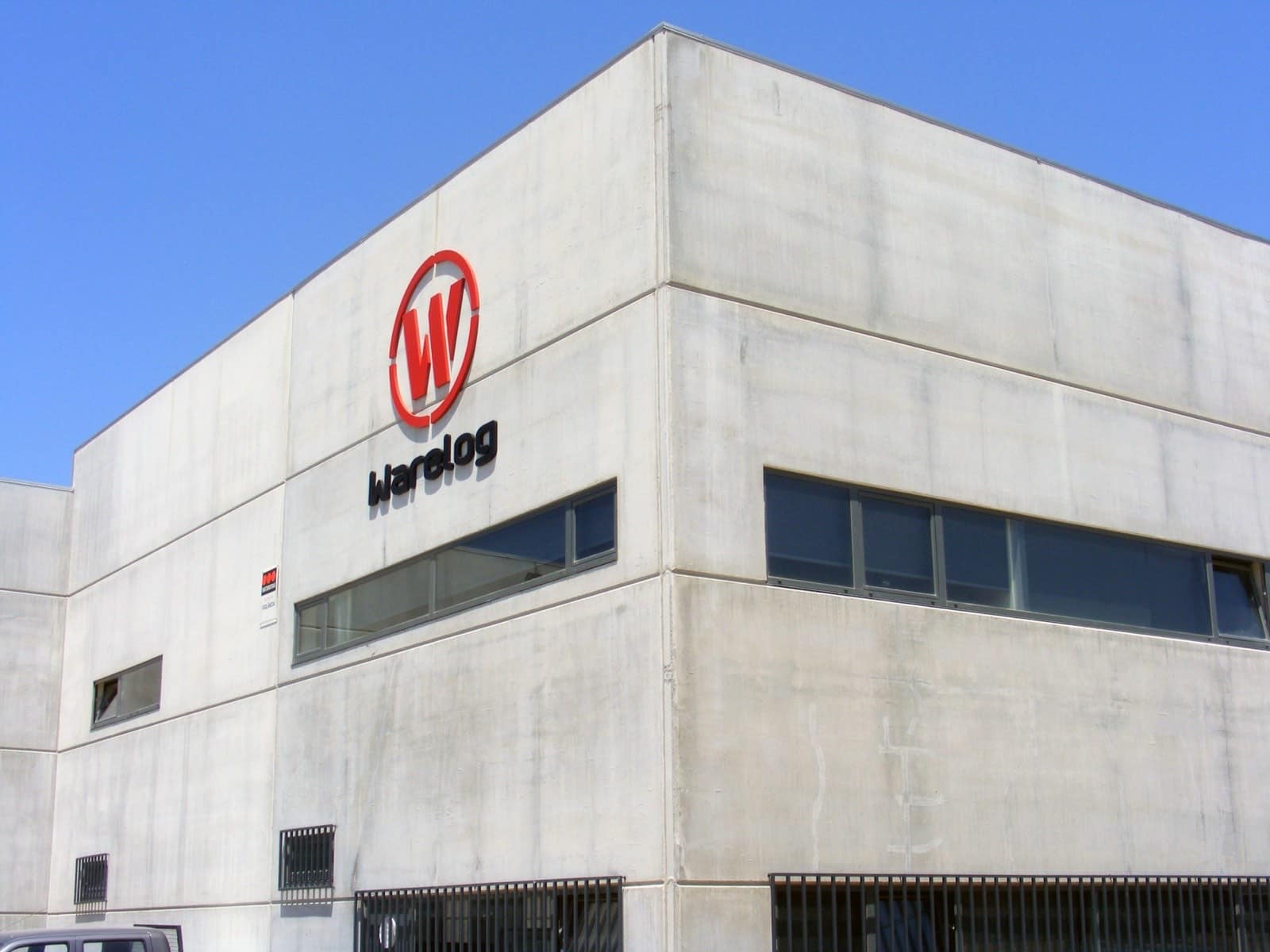
The warehouse, the bonded customs operation, and the freight behind your stock are run with our logistics partner, Warelog. Warelog is a Portuguese operator that has held customs-bonded goods for businesses since 2005. It is certified to ISO 9001:2015 and recognised as a PME Líder. EFC builds the market access and the operation around that backbone, so to you it is one base and one point of contact.
You deal with one operation, run inside Europe, with one point of contact for the stock, the customs, the compliance, and the orders. There is never a second company to call.
The operation, in numbers
Customs-bonded warehousing runs at three of the sites: Vila do Conde, Alverca, and Leixoes. Arrifana adds warehouse capacity and is not bonded.
The largest single site, Vila do Conde, runs 16,000 m2 indoor, with 13,000 m2 of outdoor area beside it.
- Pallet capacity
- ~12,000
- Warelog logistics experience
- 21 years
Installed racked pallet positions across the operation.
Warelog has held customs-bonded goods for businesses since 2005.
Bonded sites in Portugal
- Vila do Conde Touguinho, Porto area
16,000 m2 indoor and 13,000 m2 outdoor. The head site since 2006 and the dangerous-goods facility.
- Alverca Lisbon area
4,800 m2 indoor and 9,000 m2 outdoor, serving the Lisbon corridor.
- Arrifana newest northern Portugal
4,500 m2 brought online in 2026, the newest addition to the network.
- Leixoes Matosinhos, Porto port
3,000 m2 indoor and 3,000 m2 outdoor at the Porto logistics platform.
The fleet is licensed and equipped for ADR and IMO dangerous goods, and the warehouse holds an ANPC licence for their storage and handling. Warelog runs its own warehouse-management platform, so incoming and outgoing movements and live stock are on the record and readable through the operation.
THE REACH
Named European freight lines.
Goods clear once inside Portugal and then move as European freight. The road lines were built out over more than a decade, market by market, and the reach is named and concrete.
- Own road lines
- Benelux since 2011, Italy since 2016, the United Kingdom and Switzerland since 2020, and Spain since 2022.
- Italy corridor
- A daily service from Italy and twice weekly from Portugal, through the Gamco partnership.
- Intermodal routing
- Via Amsterdam and Algeciras, and via Amsterdam and Madrid.
- Sea and air
- Sea freight covers FCL and LCL; air freight covers regular and express, with a global agents network.
What the backbone handles
- Specialised cargo handling
- Staff trained across every cargo type, with consolidation for buyers and sellers drawn from the same stock.
- Non-standard and project cargo
- Oversized and non-standard goods handled, with lashing and a certificate issued for secured loads.
- Strong project development
- Operations structured around the goods, not a fixed template, so an unusual flow is built rather than refused.
Questions
The partnership, answered straight.
Who does the brand contract with, EFC or Warelog?
The brand contracts with EFC. EFC holds the commercial relationship and presents the whole as one operation, and the arrangement with Warelog sits behind that as the logistics backbone. The brand does not sign or manage a separate warehouse contract, which is what keeps it to one account and a single point of contact.
Is EFC just reselling Warelog’s warehouse?
No. This is a partnership, not a resale. EFC does not buy warehouse space and mark it up. The warehouse space and the freight network are Warelog’s, and the bonded capability is Warelog’s licensed service, delivered through the partnership. EFC brings the market access, the systems integration, and the account layer. The brand sees one European operation, with the seam inside the operation handled internally.
Who owns the brand, the customer, and the data in this model?
The brand keeps the brand, the customer relationship, and the margin in full: neither EFC nor Warelog takes ownership of the brand’s customers. Stock and order data sit in the operation, and the brand reads them through EFC’s integration layer. The brand stays in control of its inventory and order information. The partnership runs the operation; it does not absorb the brand.
What is this partnership not, to be precise about the relationship?
It is not a resale of warehouse space, and not two separate contracts the brand has to manage. It is not a customs-broker licence claim about EFC: the activity is customs clearance and import handling. It is not a notified body, not CE or device certification, and not an MDR Authorised Representative or EC REP. The ANPC dangerous-goods licence is a storage and handling capability of the backbone, not a regulatory clearance for the brand’s product. The GPSR Responsible Person credential is a separate, consumer-products-only role on its own page.

One European operation, built to last.
Tell us what you ship and where it goes. We will show you exactly how the operation covers it, end to end, as one.
Get a quote